
Research Profile:
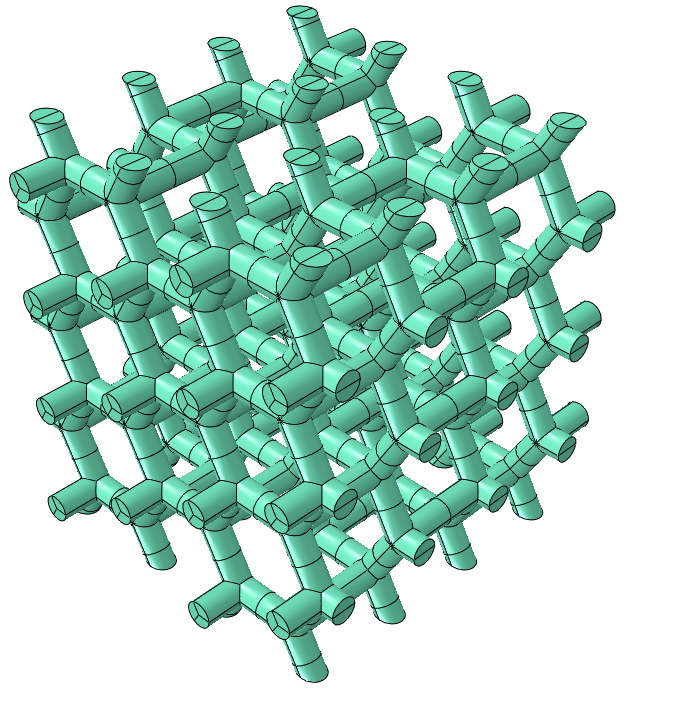
The Department of Solid Mechanics, operating within the Chair of Roads and Bridges, conducts advanced research on state-of-the-art multiphase materials, addressing key challenges in modern engineering. The Department specialises in modelling the behaviour of composite materials and structural systems subjected to monotonic, cyclic, dynamic, and thermal loading conditions. Its research portfolio encompasses the development of micro- and meso-mechanical as well as phenomenological models, enabling comprehensive analysis across multiple scales.
The academic staff includes Dr Eng. Daniel Pietras, Dr Eng. Przemysław Golewski, MSc Eng. Marek Nowicki, and Dr hab. Eng. Tomasz Sadowski—highly regarded by Elsevier for his outstanding impact on the field of composite materials and his significant contributions to the global academic community; the publisher recently celebrated his 70th jubilee. The Department’s team actively supervises international programmes, research grants, and scientific publications, while maintaining strong collaboration with leading academic institutions worldwide, and fostering the development of early-career researchers.
A notable example of research excellence is the LIDER-funded project awarded to Dr Eng. Przemysław Golewski, with funding exceeding PLN 1.4 million. The project focuses on the application of an innovative air plasma spraying method for the production of interlayers in polymer fibre-reinforced composites, establishing a foundation for advanced engineering applications such as firefighting unmanned aerial vehicles, robotic welding systems, and facade panels.
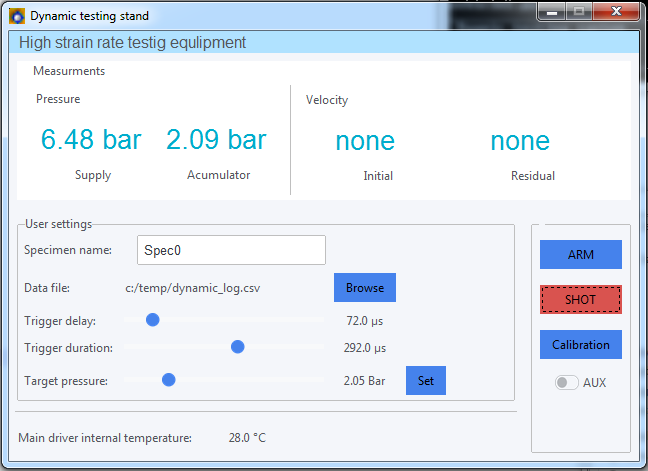
The Department’s laboratory infrastructure comprises cutting-edge research equipment, including a scanning electron microscope (SEM) and a Split Hopkinson Pressure Bar (SHPB), enabling precise characterisation of material behaviour under high strain-rate conditions simulating ballistic impact. The SHPB apparatus was designed and constructed by Dr Eng. Daniel Pietras in collaboration with the leading French research institute LEM3 in Metz, reflecting the Department’s strong international research integration. In cooperation with LEM3, a DTS system is being developed to support a family of dynamic test stations.
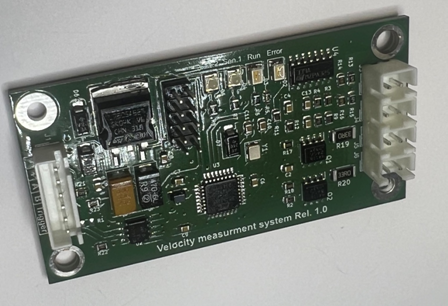

The Department effectively combines experimental investigations with advanced numerical modelling and optimisation techniques, utilising programming tools such as Python making it an attractive partner for industry.
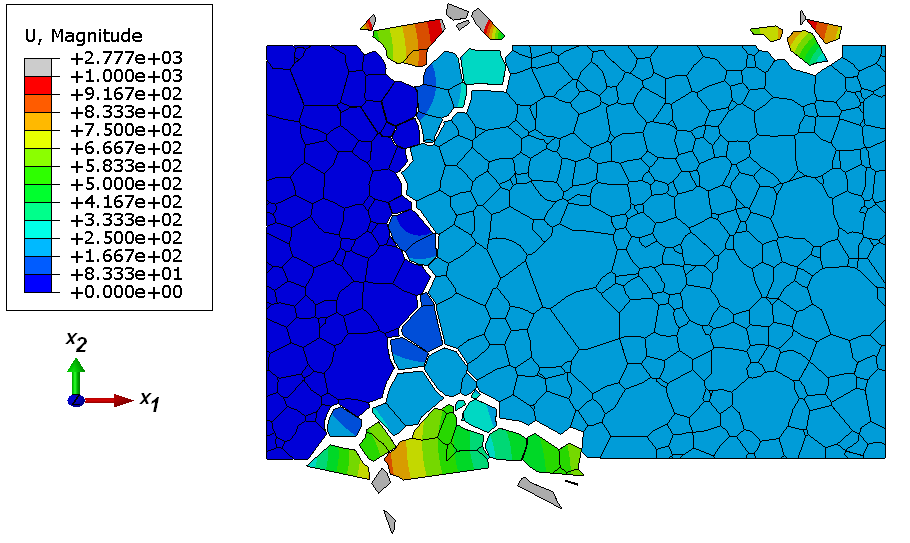
Extensive research activities include comprehensive investigations into the bond behaviour of composite reinforcement bars in concrete, with particular emphasis on durability under environmental exposure. In collaboration with the Polish Academy of Sciences, the Department has also carried out destructive testing of epoxy-based composites, providing high-quality experimental data for the validation and calibration of advanced material models.
By integrating state-of-the-art experimental capabilities with robust numerical methodologies, the Department delivers reliable, scientifically grounded, and methodologically advanced solutions, adhering to the highest standards of research excellence. Its work frequently results in practical applications in industry, translating cutting-edge research into high-value, real-world outcomes, while continuing to advance theoretical understanding and fundamental investigations.

Projekt współfinansowany ze środków Unii Europejskiej w ramach Europejskiego Funduszu Społecznego, Program Operacyjny Wiedza Edukacja Rozwój 2014-2020 "PL2022 - Zintegrowany Program Rozwoju Politechniki Lubelskiej" POWR.03.05.00-00-Z036/17